
Team Updates & Communication
We began the meeting by officially introducing Maddie, our new Communications Coordinator. While she has been with the team for a month, she is now serving as the official reporter for our meetings to ensure all discussions are accurately documented. Maddie will be the primary contact for webpage updates and is working to proactively share news items and social media content with the public.
Insights from the Monthly Newsletter
The task force reviewed the February newsletter, which focuses heavily on the practical and responsible use of technology:
- AI in Action: We highlighted how staff members, such as Karl Stamm, use AI to assist with grant reporting, grammar, and emails.
- Image Generation: The team discussed the benefits and pitfalls of AI-generated images, noting that while they are useful, they often require human refinement to ensure accuracy.
- Education and Policy: The newsletter includes information on new AI legislation from last July and free monthly webinars from the National Center for State Courts (NCSC).
- Lessons from the Field: We shared various “AI fails,” such as automated drive-thrus requiring human intervention, to remind everyone that AI should be a tool for support rather than a “truth seeker.”
Security and Data Privacy
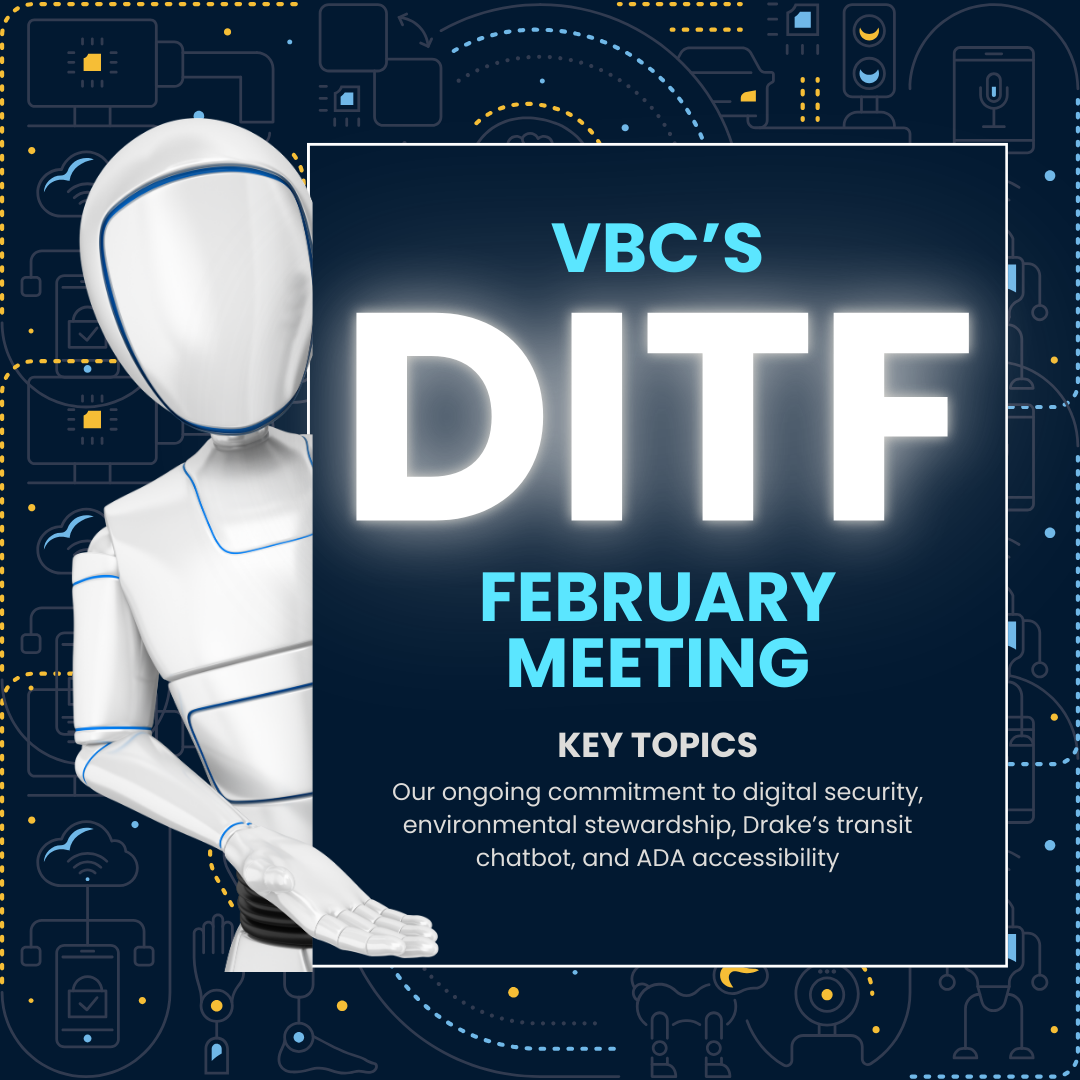
A significant portion of our discussion centered on cybersecurity. The task force is currently evaluating the risks associated with using work credentials on external AI platforms to provide a safer alternative, we are exploring a “county chat” interface using Open Web UI. This would allow employees to access powerful AI tools within a secure, internal environment that protects sensitive information and ensures all records are properly maintained.
Environmental Stewardship
The team addressed the environmental impact of using AI tools. We conducted an energy analysis of our AI assistant, “Marty,” and found that his annual electricity usage is roughly equivalent to a high-efficiency household dishwasher.
Our philosophy remains “simplify first”. We believe that using AI can often result in a net energy saving; for example, if an AI answers a resident’s question so thoroughly that they no longer need to drive to the courthouse, the fuel saved by that resident helps offset the energy used by the AI.
New AI Transit Chatbot
Drake demonstrated an innovative AI chatbot designed to help residents find local transportation resources. This tool is intended to be an additional option alongside traditional web forms, providing a more conversational way to access information.
By simply telling the chatbot where they are, where they need to go, and the purpose of their trip, users can receive tailored travel options. The AI searches a database of various services, such as buses and taxis, to identify resources that meet the user’s specific accessibility and timing needs. This conversational interface makes it easier for residents to navigate complex transit data without needing to fill out multiple form fields.
Advancing Digital Accessibility
Finally, we discussed our ongoing efforts regarding ADA compliance. The team is auditing county documents and website forms to ensure they are accessible to residents who use screen readers. We are working to replace outdated templates with accessible versions to ensure that every resident has equal access to county information.