
-by Jerry Happel, Director, Digital Information Department (10/20/25)
AI is moving at the sort of pace usually reserved for toddlers on sugar and investors in a gold rush. Every week, a new tool launches, trumpeting promises of revolution. Some really do seem world-changing, for a few months, until they’re quietly replaced by something faster, cheaper, or ever-so-slightly more “disruptive.”
For counties like ours, this creates a very modern trap: it’s easy to spend time, energy, and taxpayer dollars chasing technologies that age faster than ripe bananas in August.
So what actually lasts?
Tools change. Our foundations don’t.
Some parts of our work is evolving rapidly, interfaces, chatbots, low-code automation platforms with suspiciously cheerful branding. These things come and go, and often go faster than they came.
But the underlying information that defines how Van Buren County functions, our property records, ordinances, meeting minutes, tax rolls, moves at a more geological pace. These are not just files. They are institutional memory in a durable format.
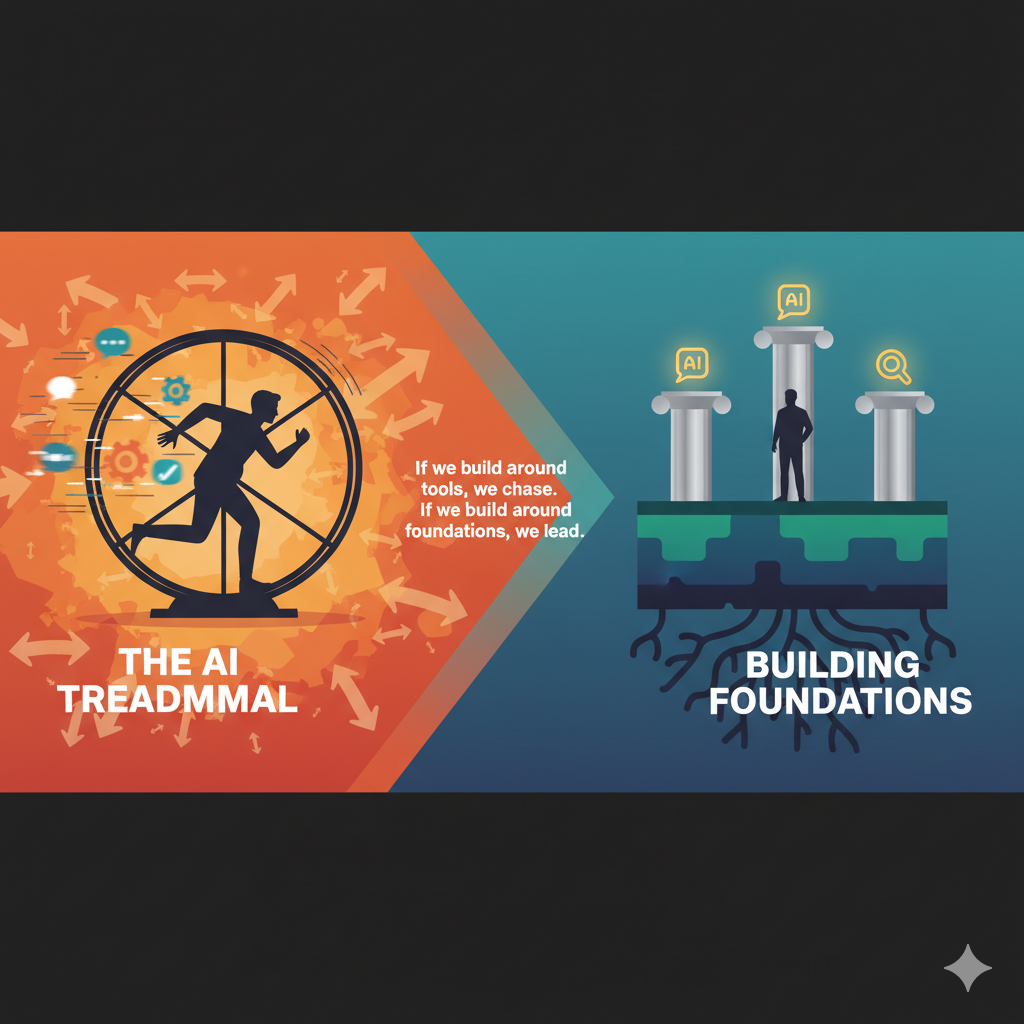
If we chase tools, we will end up rebuilding every few months. If we build foundations, we will create something that outlasts the fashion cycle of technology.
Chasing shiny things vs. owning the groundwork
Yes, it’s tempting to chase the latest AI solution that promises a quick win, especially when there’s a demo video involved. And to be fair, experimenting isn’t inherently bad. Sometimes we do need to try the new thing just to learn what doesn’t work.
But Van Buren County can’t afford to mistake temporary tools for long-term strategy.
The real long game isn’t about tools. It’s about infrastructure:
- Making our data structured and machine-readable
- Taking ownership of our official information, so AI doesn’t have to guess
- Building the digital plumbing that future tools can plug into, no matter who builds them
If we get that part right, it doesn’t matter if today’s AI platform vanishes into the mist tomorrow. The foundation stays.
Why this matters more than ever
Sooner than we think, more residents won’t be digging through our website to find answers. They’ll just ask AI.
And here’s the rub: if we haven’t provided accurate, structured, authoritative information, AI will improvise. It’ll pull from stale PDFs, fragmented state records, or outdated third-party data scraped from who-knows-where.
That’s not a technical failure. It’s a governance failure. If Van Buren County doesn’t provide its digital voice, someone (or something) else will speak on our behalf.
Two different futures
Imagine this: A neighboring county gets its act together. They invest in structured, trustworthy data. They publish clear, machine-readable information. AI tools tap into it effortlessly. Their residents get fast, accurate answers straight from ChatGPT, Claude, Gemini, etc.
Van Buren County does nothing. Those chatbots still try to answer questions about us, but now it’s guessing, from half-archived documents and poorly scanned PDFs. It’s wrong more often than it’s right. Over time, we lose control of how we’re represented, digitally and politically.
The difference isn’t the AI tool. It’s the foundation beneath it.
Where we actually need to focus
We don’t need to predict which vendor will dominate next year’s AI market. We don’t always need to be the first county to try every shiny object.
We do need to invest in the things that don’t evaporate:
- Clean, structured, trustworthy data about Van Buren County
- Clear ownership of what counts as official
- Infrastructure that endures longer than the current crop of tools
This is why the DID is prioritizing building the Van Buren County Knowledge Base. Not because it’s flashy (it isn’t), but because it’s foundational. It’s the bedrock layer future AI tools will stand on, whether we build them or not.
The bottom line
Tools change. Foundations endure. If Van Buren County builds on tools, we’ll chase. If we build on foundations, we’ll lead.
That’s not just an IT decision. It’s a strategic one.